Audi Repair in Dubai: Engine, Transmission & Electrical Problems
Audi Repair in Dubai: Understanding Engine, Transmission and Electrical Problems
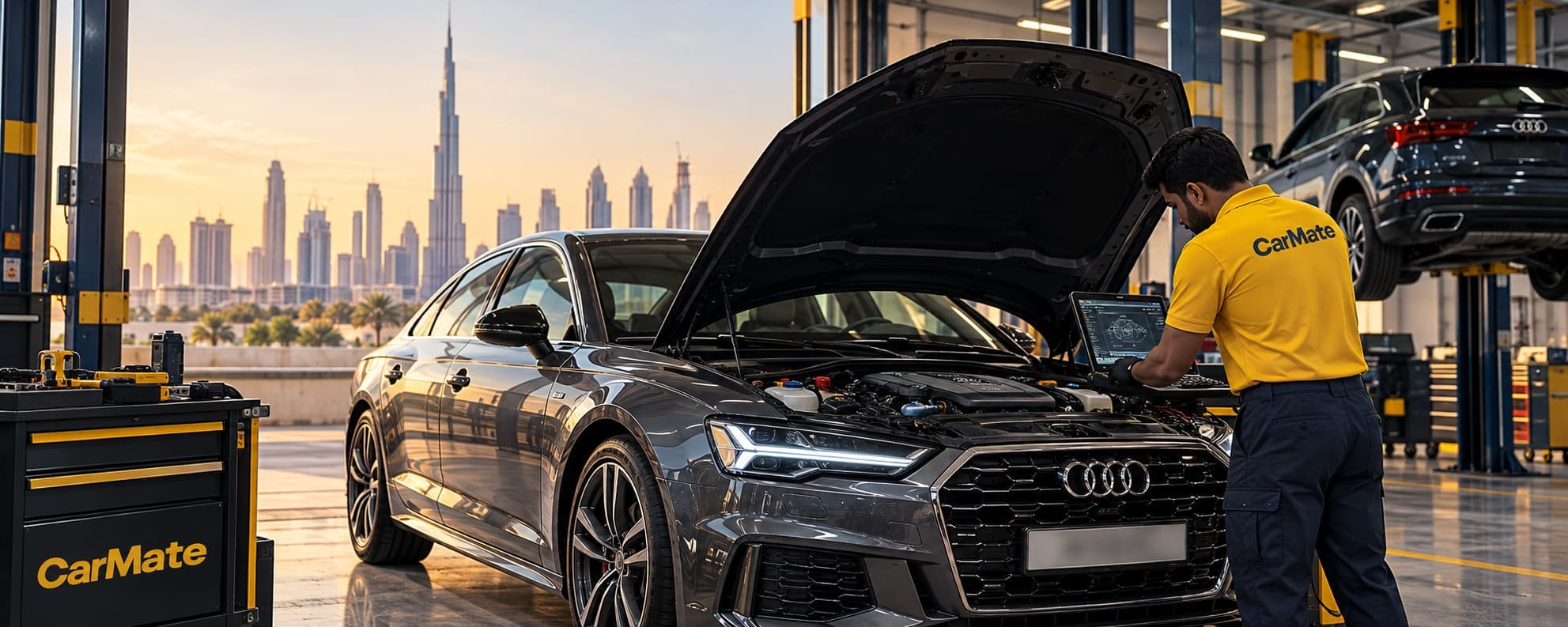
Audi repair in Dubai often involves diagnosing engine-performance issues, transmission faults, electrical warnings, or cooling-system problems. High temperatures, heavy traffic, and dusty conditions can increase maintenance demands. Identifying the underlying cause early helps Audi owners make informed decisions about repairs.
Where Can You Get Audi Repair in Dubai?
Carmate Auto Care is located in Ras Al Khor Industrial Area 2, Dubai. Audi owners experiencing mechanical or electrical problems can review the workshop's Audi service page to explore its listed brand-related services.
The right repair depends on the vehicle's model, production year, engine, transmission, and symptoms. Before replacing parts, a technician should establish the likely cause through appropriate diagnostic testing.
What Are the Most Common Audi Engine Problems?
Audi engine problems may involve oil leaks, ignition misfires, turbocharger-related faults, fuel-delivery issues, or cooling-system defects. The specific risks vary by engine type, mileage, vehicle condition, and maintenance history.
Why is an Audi losing power?
Reduced engine power can result from an air-intake restriction, boost-pressure leak, ignition fault, fuel-delivery problem, sensor malfunction, or an engine-management response.
Many Audi TFSI petrol engines use turbocharging, while TDI models use diesel engine technology. Both rely on multiple components working together to deliver the expected performance.
A diagnostic investigation may include:
- Reading engine fault codes.
- Checking relevant sensor data and boosting pressure.
- Inspecting air-intake and associated components.
- Testing ignition or fuel-delivery systems where applicable.
A loss of power does not automatically mean the turbocharger has failed. Testing should identify the cause before a repair is recommended.
What causes Audi engine oil leaks?
Oil leaks may develop from deteriorated seals, gaskets, or other engine components. Oil consumption is a separate issue and can have different causes depending on the engine design and condition.
Watch for oil spots beneath the vehicle, a burning-oil smell, or recurring low-oil-level warnings. Repeated oil loss should be investigated instead of being managed through topping up alone.
If the oil-pressure warning appears, stop safely and follow the manufacturer's instructions. Low oil pressure can cause serious engine damage.
Why does an Audi engine shake or misfire?
Rough idling, hesitation, and uneven acceleration may indicate worn spark plugs, ignition-coil faults, injector problems, air leaks, or other engine-management issues.
Persistent misfires should be diagnosed promptly because they can affect performance and potentially damage the catalytic converter.
For these symptoms, an Audi repair service in Dubai should begin with identifying the fault rather than assuming a particular component needs replacement.
What Causes Audi Transmission Problems?
Audi transmission problems can include delayed gear engagement, harsh shifting, shuddering, slipping, or transmission warning messages. Possible causes include clutch wear, fluid-related issues, hydraulic faults, electronic controls, or internal mechanical damage.
Audi uses different transmission systems across its model range, including S tronic dual-clutch and tiptronic automatic transmissions. Their maintenance requirements and diagnostic procedures are not interchangeable.
Why does an Audi jerk when changing gears?
Jerking during gear changes may indicate a transmission-control issue, clutch-related wear, or another mechanical or fluid-related problem. The driving conditions in which the symptom appears can help narrow the possibilities.
A proper diagnostic process may involve retrieving transmission fault codes, examining available operating data, and checking the vehicle-specific maintenance requirements.
Important: Not every transmission problem requires a complete gearbox replacement. The fault should be verified before major repair work is approved.
Why Does an Audi Display Multiple Electrical Warning Lights?
Multiple dashboard warnings can result from electrical supply issues, communication faults, sensor failures, wiring problems, or faults in individual control modules.
Modern Audi vehicles contain interconnected electronic systems that manage engine operation, transmission functions, safety features, and infotainment. Consequently, one underlying issue can sometimes affect several systems.
Common examples include:
- Slow starting: The battery, starter motor, charging system, or electrical connections may need testing.
- Several warning lights appearing together: Technicians may need to investigate shared electrical supplies and communication between modules.
- Intermittent sensor warnings: Wiring, connections, sensor signals, or control modules may require further testing.
- Infotainment interruptions: Possible causes include software, power supply, wiring, or component faults.
Fault codes help guide diagnosis but do not always identify the failed component conclusively. Appropriate testing is needed to confirm the cause.
How Does Dubai's Climate Affect Audi Vehicles?
Dubai's environment can increase the demands placed on several vehicle systems. However, the impact depends on how the car is driven, its maintenance history, and its mechanical condition.
Engine cooling and extreme heat
High ambient temperatures make a functioning cooling system essential. Coolant leaks, damaged hoses, radiator problems, or thermostat and water-pump faults can contribute to overheating.
If the engine temperature rises abnormally, stop safely and follow the manufacturer's guidance. Never open a hot coolant reservoir.
Air conditioning performance
Frequent AC use makes cabin cooling particularly important in Dubai. Warm air, reduced airflow, or unusual odours may indicate a restricted cabin filter, refrigerant-system fault, compressor issue, or electrical problem.
The correct diagnosis depends on the observed symptoms and system testing.
Battery condition and electrical reliability
High temperatures can accelerate battery deterioration. Frequent short trips may also limit the battery's ability to recover the energy used during starting, depending on driving patterns and the vehicle's electrical system.
Battery and charging-system tests can help determine whether a starting problem originates from the battery or another component.
Dust and air filtration
Dust exposure makes engine and cabin air-filter inspections relevant. Filter replacement should follow the vehicle's requirements and the actual condition of the filter.
When Should You Arrange an Audi Inspection in Dubai?
An Audi inspection in Dubai may be appropriate when you notice unusual engine behaviour, transmission changes, electrical warnings, fluid leaks, or cooling problems.
Arrange an assessment if your vehicle experiences:
- Repeated engine misfires or reduced power.
- Oil or coolant loss.
- Rough or delayed gear changes.
- Recurring battery or electrical warnings.
- Declining AC performance.
- Unusual braking, suspension, or tyre behaviour.
An inspection can help identify visible damage, stored fault codes, and potential mechanical concerns. Intermittent or internal faults may require additional testing.
For urgent oil-pressure, overheating, or braking warnings, stop safely and follow the owner's manual rather than continuing to drive.
How Should You Choose an Audi Service in Dubai?
Choosing an Audi repair provider involves more than finding a workshop nearby. An Audi service in Dubai should be appropriate for the vehicle and the fault being investigated.
Before authorising significant repairs, ask the workshop:
- What evidence confirms the diagnosis?
- Which tests were performed?
- Are the recommended repairs necessary immediately?
- Are the parts and specifications suitable for the exact Audi model?
- How will the repair be checked afterward?
Carmate Auto Care is based in Ras Al Khor Industrial Area 2, Dubai. Visit its Audi service page or browse its general automotive services.
Contact the workshop to confirm the availability of the specific Audi diagnostic or repair procedure you require.
Frequently Asked Questions
How much does Audi repair cost in Dubai?
The cost depends on your Audi model, the type of repair, replacement parts, and the labour involved. A diagnostic assessment helps identify the problem and provides a clearer estimate before repair work begins.
How often should I service my Audi in Dubai?
Follow the service intervals specified for your Audi model and engine. Driving conditions, mileage, vehicle age, and the manufacturer's maintenance recommendations can influence when certain components need inspection or replacement.
Is it safe to drive my Audi with a warning light on?
It depends on the warning. Some alerts indicate routine maintenance, while others may signal a serious fault. If you see an oil-pressure, overheating, or braking warning, stop safely and follow the owner's manual. Have persistent warning lights checked promptly.
Can I take my Audi to an independent garage instead of a dealership?
Yes, you can consider an independent workshop, provided it has the appropriate diagnostic equipment, technical expertise, and repair procedures for your specific Audi model. Ask about the proposed work, parts, warranty terms, and diagnostic findings before authorising repairs.
What should I check before booking an Audi repair appointment?
Note the symptoms, when they occur, any dashboard warnings, and whether the issue happens during starting, acceleration, braking, or gear changes. Sharing your Audi's model, year, mileage, and service history can help the workshop prepare for the assessment.
Need Audi repair in Dubai?
Engine, transmission or electrical warnings—share your Audi model, year and symptoms. Leave your details and we will call you back to arrange an inspection at CarMate in Dubai.