Can the Engine Management Light Be Switched On by Hot Weather?
Can the Engine Management Light Be Switched On by Hot Weather?
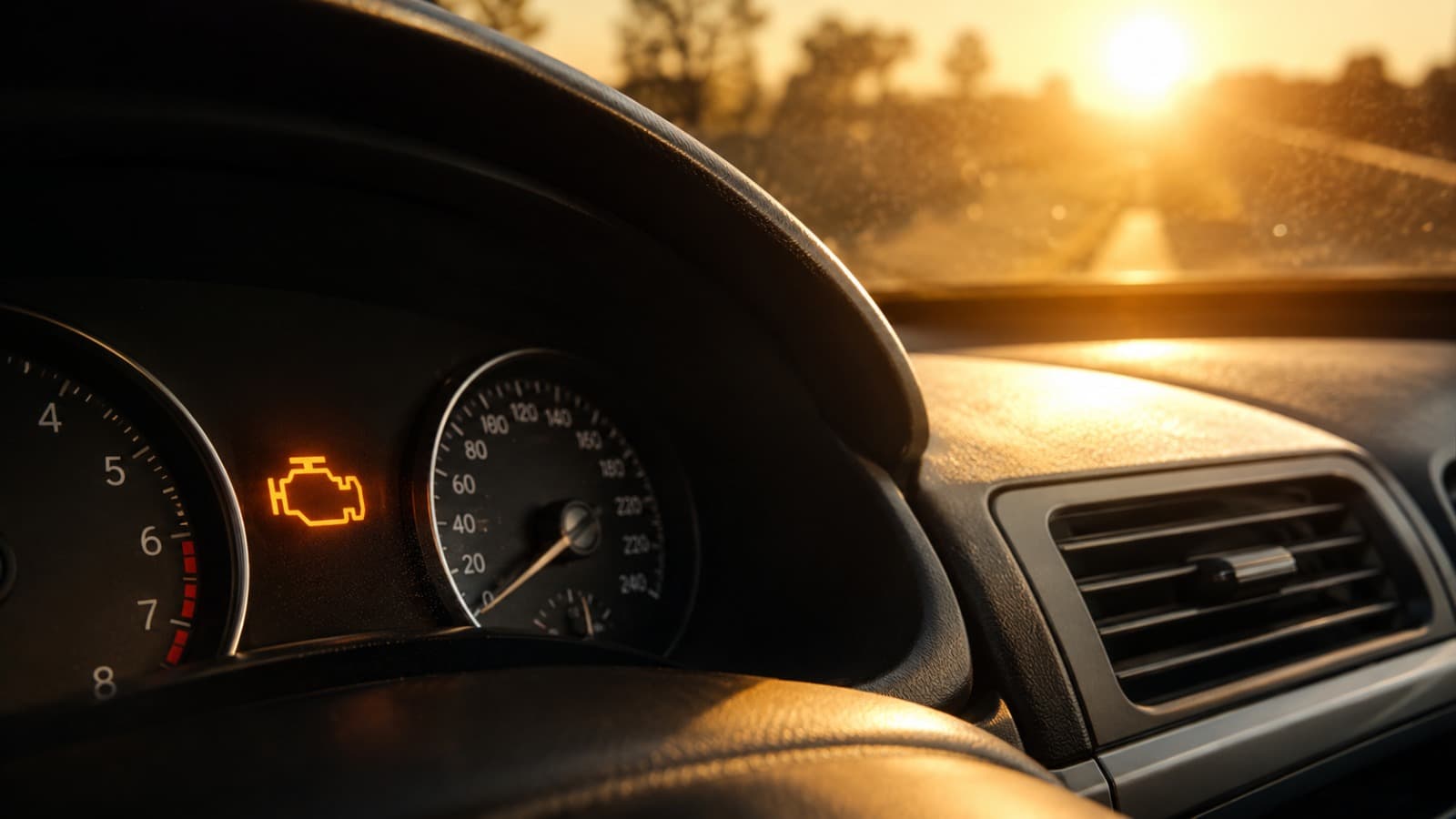
You're not mistaken if the engine management light on your dashboard has flashed during a heatwave — real hot weather can indeed cause it. Although the light merely indicates that the car's onboard computer has picked up something that's outside the normal range, high temperatures are a frequent and often neglected reason. The following explains what is actually happening and tells you when it's time to take your car in.
What the Engine Management Light Actually Means
The engine management light (EML), known as the check engine light, is linked to the car's Engine Control Unit (ECU). This ECU continuously keeps an eye on the sensors located throughout the engine, the fuel system and the emissions components. If a reading is found to be outside the range that is expected, the ECU will record a fault code and activate the warning light on the dashboard, even if the actual problem is minor or serious.
How Hot Weather Triggers the Light
1. Engine overheating temperatures
On very hot days, particularly when the traffic is stop-start or during long journeys, engine temperatures can rise faster than usual. If the coolant temperature sensor finds that the engine is running hotter than it should, the ECU will notice this and the warning light will come on — sometimes together with a temperature warning.
2. The stress on the coolant system
The heat places additional pressure on the cooling system; if the coolant level is already only slightly low, the radiator cap is aging, or the coolant mixture is not suitable for the season, then it will have difficulty in hot weather and the temperatures will reach faulty levels more quickly than they would during the cooler months.
3. Oxygen and air intake sensor readings
Because the hot ambient air is less dense, the air-fuel ratio entering the engine changes. The oxygen sensors and the mass airflow sensors can detect this change, and if the ECU is unable to make up for it, it might register a fault.
4. Evaporative Emissions (EVAP) system issues
Heat makes it easier for fuel to vaporize; if there is a small leak or if the fuel cap is loose, the EVAP system — designed to catch these vapours — will set off a fault code much more easily in the summer than in the winter, even though the original problem has always been present.
5. Battery and electrical stress
The extreme heat causes the battery to break down more quickly and can have an effect on the electrical connections in the engine compartment; voltage irregularities resulting from components under the stress of heat may sometimes be sufficient to set the ECU's warning system into action.
Is It Safe to Continue Driving?
- If the only symptom is a steady light, you can generally keep driving with care, but it should be checked soon.
- If there is a flashing light, or if this is combined with a temperature warning, unusual odours, or a loss of power: pull over safely and stop the engine, since carrying on driving could result in serious engine damage.
What to Do When the Light Comes On
- Once the engine has cooled down, check the level of your coolant — do not open the cap when the engine is hot.
- Be sure to note any other symptoms such as odd noises, smells, decreased power, or a rising temperature gauge.
- Use a diagnostic scan to retrieve the fault code, rather than making an educated guess.
- If the light continues to stay on, arrange for a proper inspection even if the car appears to be driving normally.
Don't Ignore It — Get It Checked
The heat can bring to light small problems — such as a slightly low coolant level, an ageing sensor, or a loose fuel cap — those which would normally go unnoticed. If they are not dealt with, they can develop into more serious and expensive repairs when the heat causes your car's systems to reach their limits.
Did you notice your engine management light coming on this summer? As the best car garage in Dubai, the best car garage in Abu Dhabi, and the best car garage in Musaffah, CarMate provides a complete diagnostic check so the precise cause can be found before it turns into a more serious issue.
Book your service today at carmate.ae and drive with confidence all summer long.
📞 Contact CarMate
Abu Dhabi Workshop: Car Mate Auto Workshop ADNOC Vehicle Inspection Centre – Muroor Road
📞 +971 52 727 5222
Dubai Workshop: Ras Al Khor Industrial Area 2
📞 +971 52 737 5333
Engine management light on? Book a diagnostic check today
Heatwaves can trigger real faults or minor sensor issues. Leave your details and we will call you back to book a complete diagnostic check at CarMate in Dubai or Abu Dhabi.