10 Things to Check Before Buying a Used Car in Dubai
10 Things to Check Before Buying a Used Car in Dubai
Before you pay for a used car in Dubai, check the ownership papers, unpaid fines and bank finance, signs of accident repair and flood damage, the engine and gearbox, the A/C, the tyres and brakes, the mileage against the service history, and the car's specification. Then book an independent pre purchase inspection in Dubai before handing over any money.
Used cars here can be good value, but a clean exterior tells you very little. Repainted accident damage, rolled-back mileage, an unpaid bank loan or a car that has been under water can all hide behind a good photo and a fair price.
The 10 Checks at a Glance
- Ownership papers and VIN
- Fines, Salik and bank finance
- Accident history and bodywork
- Flood damage
- Engine, gearbox and fault codes
- Air conditioning and cooling
- Tyres, brakes and suspension
- Mileage and service history
- GCC spec or imported
- A professional pre-purchase inspection
1. Do the Ownership Papers and VIN Match?
Start with paperwork, because it costs nothing and rules out the worst problems.
- Ask to see the original registration card (Mulkiya) and the seller's Emirates ID. The names should match.
- Compare the 17-digit chassis number (VIN) on the paperwork with the one on the car. It is usually visible at the base of the windscreen and on a sticker in the door frame.
- Look at the first registration date and the number of previous owners. A car sold as a 2021 model that was first registered in 2019 is not a 2021 car.
If the person selling is not the registered owner, walk away unless they can show a proper power of attorney.
2. Are There Unpaid Fines, Salik Charges or Bank Finance?
A car can look perfect and still come with someone else's debt.
- Traffic fines: check the vehicle's fines through the official Dubai Police or RTA channels, or ask the seller to clear them before the sale.
- Bank finance: if the car is on a loan, the seller must settle it and give you the bank's liability clearance letter before the transfer can go through.
- Salik and parking: agree in writing who pays any balance.
Put every agreement, including who pays for what, into a written sale agreement before any money changes hands.
3. Has the Car Been in an Accident?
An accident history is not automatically a reason to reject a car. What matters is how serious it was, which parts were damaged and how they were repaired. Replacing a headlight is very different from repairing structural damage.
What to look for yourself, in daylight:
- Uneven panel gaps, mismatched paint colour or texture.
- Overspray on rubber seals, trim and lights.
- Unusual welding, or bolts and panels that look like they have been removed before.
- Ripples in the panels when you look along the side of the car at a low angle.
You can also use the VIN to check a vehicle's accident history through official RTA and Ministry of Interior inquiry services. However, a clean accident report doesn't guarantee the car is problem-free. If you're planning to buy a used car, contact Carmate Auto Care for a professional pre-purchase inspection in Dubai and make a more confident buying decision.
4. Has the Car Been Damaged by Flooding?
After heavy rain in the UAE, flood-damaged cars can find their way onto the used market. Water damage often shows up months later as electrical faults and corrosion, so it is worth checking carefully.
- Smell the cabin for dampness or mould, and be wary of strong air fresheners.
- Lift the carpets and floor mats and look for water marks, silt or rust underneath.
- Check the spare wheel well, seat rails and under the dashboard for mud, sand or corrosion.
- Look for condensation inside the headlights and tail lights.
- Test every electrical item, including windows, mirrors, seats, screens and warning lights.
Flood damage is one of the hardest problems to spot on a short viewing, so mention any doubts to whoever inspects the car.
5. How Do the Engine and Gearbox Behave, and What Do the Fault Codes Say?
Ask the seller not to start the car before you arrive. A cold start shows problems that a warm engine hides.
- Listen for rough idling, ticking, knocking or rattling on start-up.
- Look for exhaust smoke, oil leaks around the engine and gearbox, and low or discoloured coolant.
- Check the oil on the dipstick. Milky or very dark oil needs an explanation.
- On the test drive, watch for gearbox hesitation, jerking or slipping between gears.
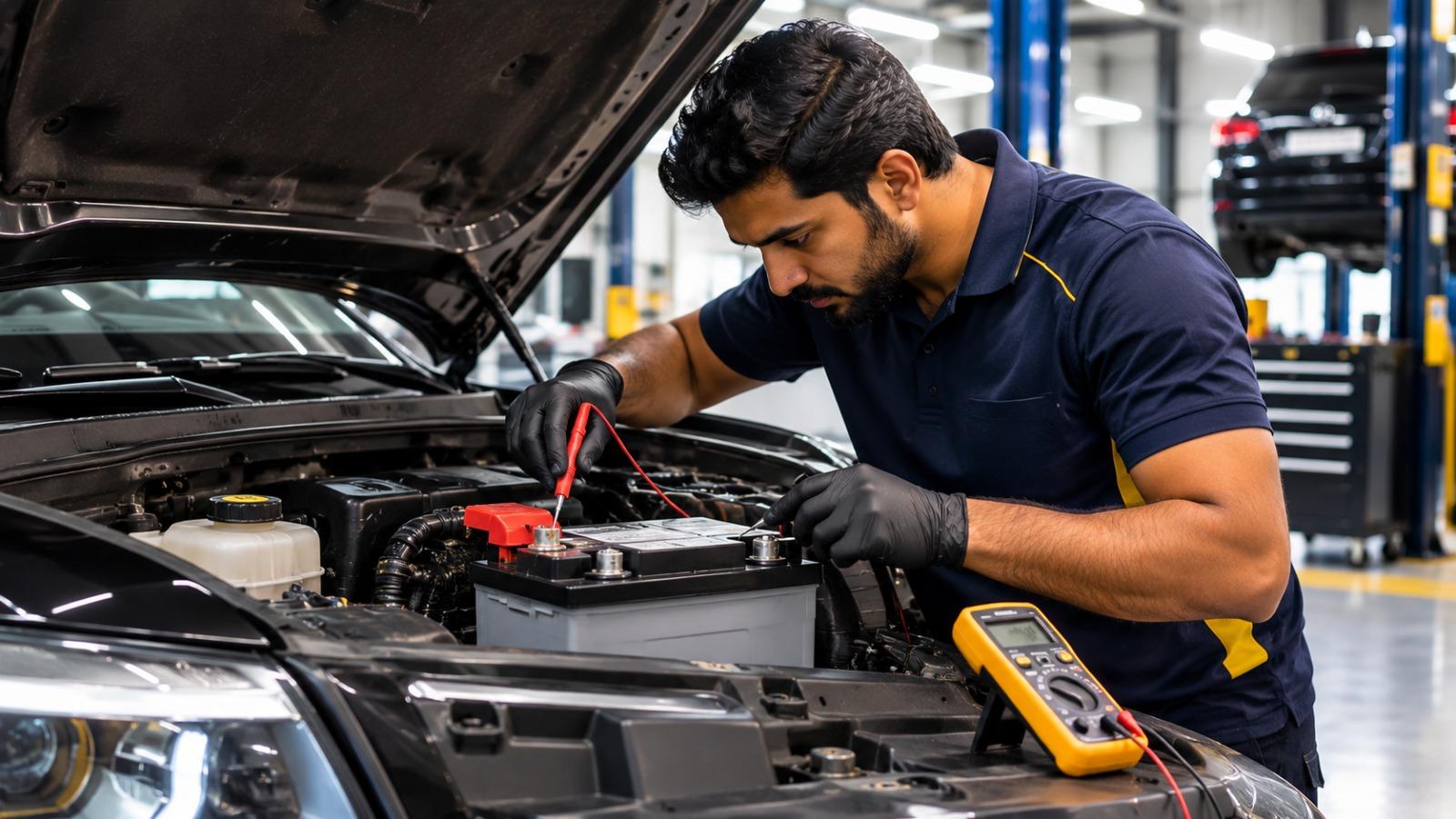
An OBD diagnostic scan reads the fault codes stored in the car's computers, including ones that no longer show as dashboard warnings. This is one of the main reasons a workshop check finds more than a visual one.
6. Does the A/C Stay Cold in Dubai Traffic?
In this climate, a weak A/C is not a minor fault. Repairs to the compressor, condenser or gas leaks can be costly.
- Run the A/C at full strength for at least 10 to 15 minutes, not just a quick test.
- Check that every vent blows cold, on every fan speed.
- Listen for a noisy compressor, and notice whether cooling fades when the car idles at a red light.
- Keep an eye on the temperature gauge during the drive. It should stay steady.
7. What Condition Are the Tyres, Brakes and Suspension In?
These wear parts show how the car was really driven, and they are useful in price negotiations.
- Tyres: check the tread depth, uneven wear, and the four-digit date code on the sidewall. Heat ages rubber quickly, so tyres that are five or six years old are worth replacing even if the tread looks fine.
- Brakes: feel for pulsing or pulling to one side, and listen for grinding.
- Suspension: drive over a speed bump and listen for clunks or knocks.
Heavy uneven tyre wear can point to alignment, suspension or even accident damage, so mention it to whoever inspects the car.
8. Does the Mileage Match the Service History?
Odometer tampering is less common than it was, but a car's history should still make sense.
- Ask for the full service records and compare the mileage entries with the dashboard reading.
- Look at wear on the steering wheel, driver's seat, pedals and gear knob. A car showing 60,000 km should not look like it has done 200,000.
- Ask whether any warranty or service contract is left and whether it transfers to you.
A car with no service history is a bigger gamble, and the price should reflect that.
9. Is It GCC Spec or Imported?
GCC-specification cars are built for local conditions, including the heat. Imported cars from other markets can be perfectly good, but they need a closer look.
- Check the specification on the registration and on the car itself.
- Ask where the car came from and request any import documents.
- Be careful with imports that may have been written off after a serious accident abroad. A workshop can look for signs of this.
Also check whether spare parts, maintenance and repairs for that specific model are readily available in the UAE. Consider the vehicle's service history, maintenance requirements and expected repair costs to understand what owning it may involve beyond the purchase price.
10. Why Get a Professional Pre-Purchase Inspection?
Everything above helps you narrow down your options, but a professional pre-purchase inspection in Dubai can help uncover issues that may not be obvious during a test drive or visual check.
What Does a Pre-Purchase Inspection Cover?
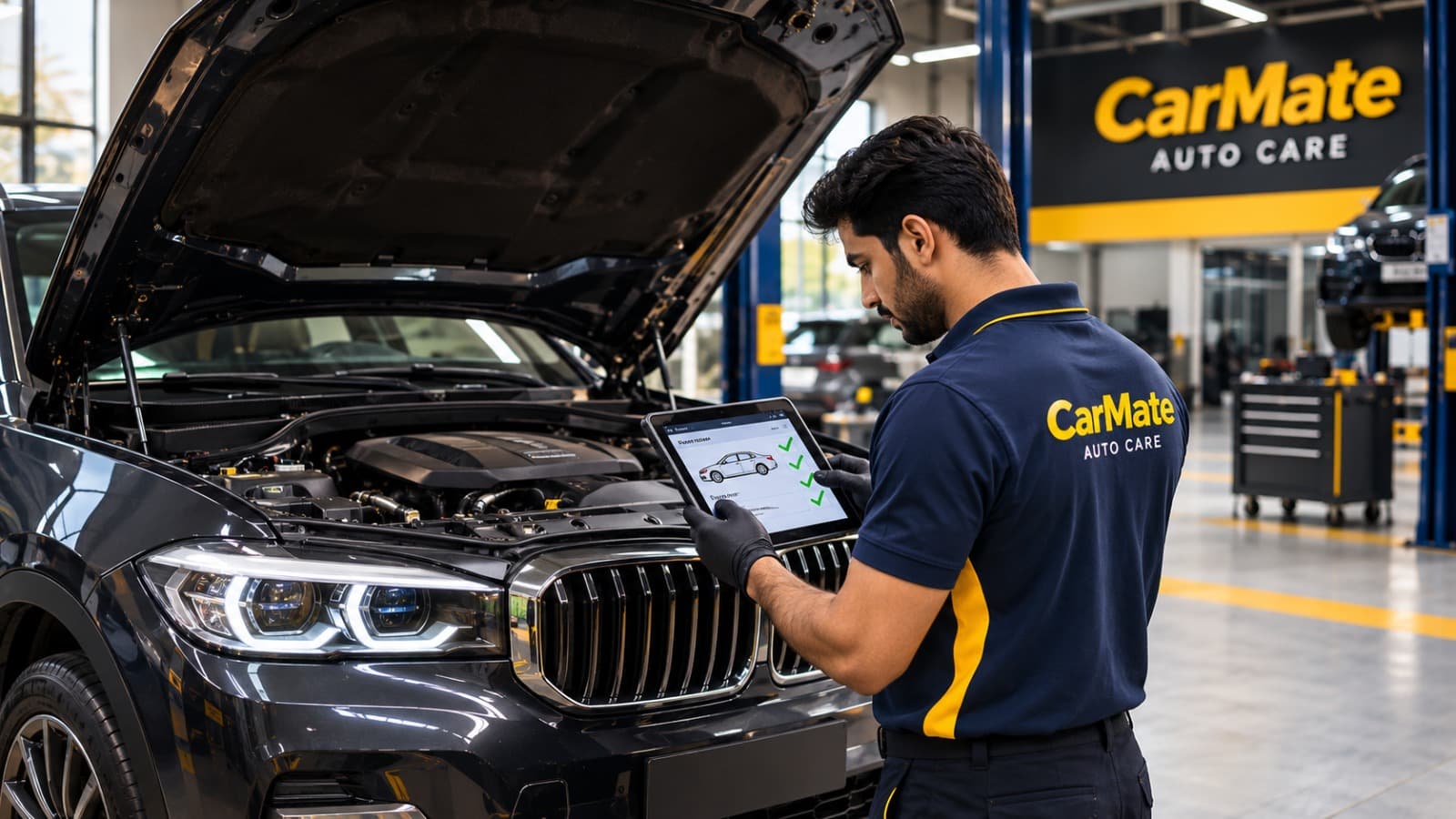
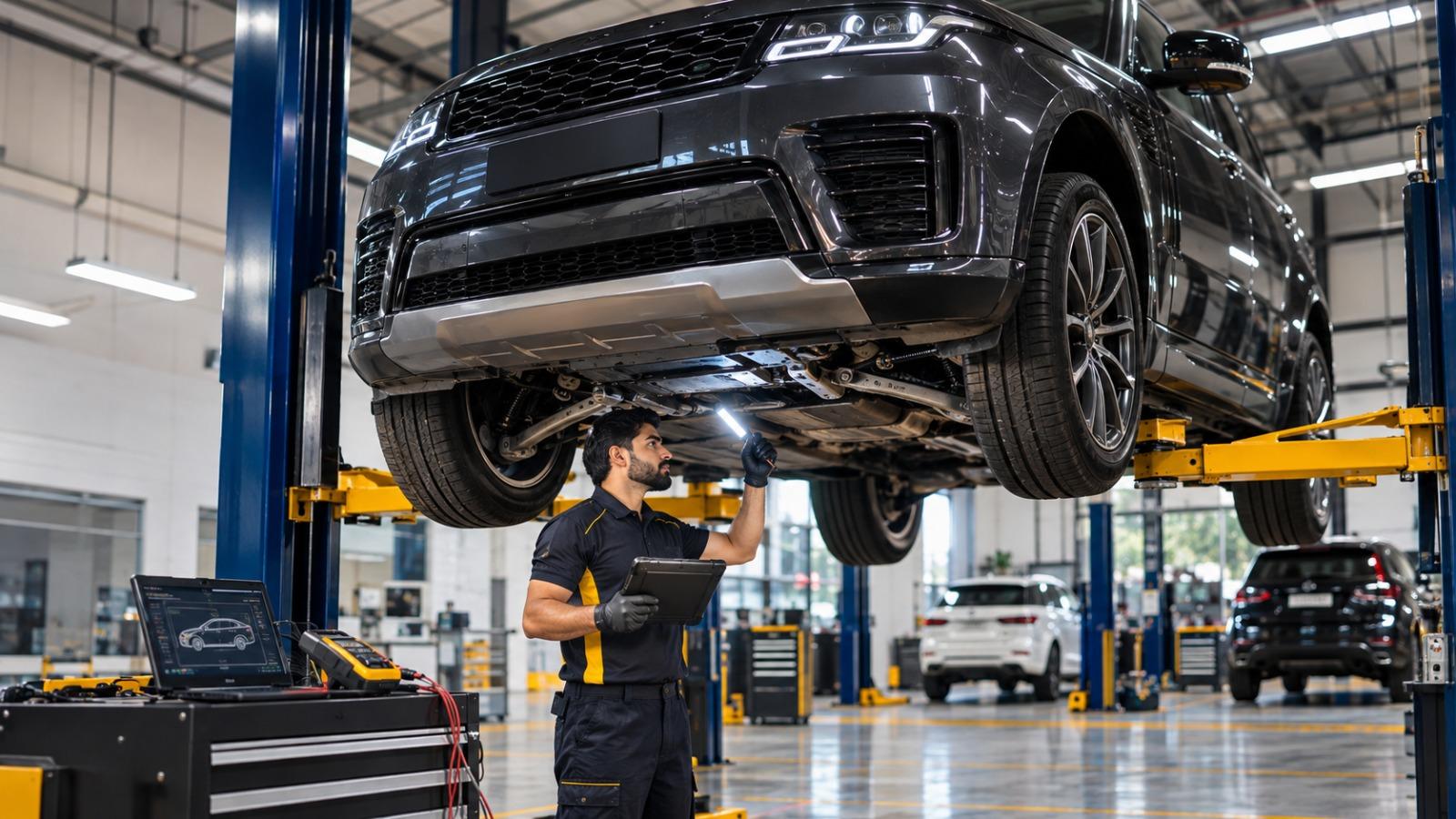
A pre-purchase inspection assesses the vehicle's overall condition, including the engine, electrical systems, bodywork, tyres, interior and mechanical components. It also helps identify signs of previous damage, poor repairs and hidden faults. A detailed inspection report gives you a clearer understanding of the vehicle's condition before making a buying decision.
How Much Does a Pre-Purchase Inspection Cost?
The cost of a pre-purchase inspection depends on the vehicle, the level of inspection required and the components being assessed. Contact Carmate Auto Care to confirm the inspection cost and what's included before booking.
If you're planning to buy a used car in Dubai, book a pre-purchase inspection with Carmate Auto Care to better understand the vehicle's condition before making your investment.
Common Mistakes to Avoid
- Judging a car by its photos and its price alone. A Dh5,000 discount is not a bargain if the history does not check out.
- Letting the seller choose the inspector or the workshop.
- Paying a deposit before the inspection and the paperwork checks are done.
- Skipping the test drive, or doing it only around the block.
- Relying on a single history report and skipping the physical check.
- Forgetting to budget for a service and any small repairs straight after you buy.
Dubai and UAE Factors Buyers Often Overlook
- Heat: the climate is hard on A/C systems, batteries, tyres and rubber parts, so wear here can be faster than the odometer suggests.
- Dust and sand: look in the engine bay corners, the spare wheel well and the air vents for heavy build-up.
- Floods: after heavy rain, always run the flood checks in section 4.
- Specification: GCC-spec and imported cars can differ in cooling, equipment and parts availability.
- Fines, Salik and finance: these stay with the vehicle record until settled, so confirm them before the transfer.
Frequently Asked Questions
What is a pre-purchase inspection in Dubai?
A pre-purchase inspection is an independent check of a used car's mechanical, electrical, body and general condition before you buy it. It is meant to reveal faults, previous repairs and accident damage that you may not spot yourself.
How much does a pre-purchase car inspection cost in Dubai?
At Carmate Auto Care, a pre-purchase car inspection starts at AED 249 + VAT. The inspection covers key vehicle components to help you understand the car's condition before buying. Contact our team to confirm the inspection details and book your appointment.
Who pays for the inspection?
The buyer normally pays, since the report is for the buyer's protection. If the seller offers their own report, you can still ask for an independent one.
How long does a used car inspection take?
It depends on the workshop and how detailed the check is. Ask when booking, and ask when you will receive the written report.
Can I check a used car's accident history in the UAE?
Yes. You can use the car's VIN with the official RTA and Ministry of Interior accident inquiry services. A history report is useful, but it should be combined with a physical inspection.
Should I always avoid a car that has had an accident?
Not automatically. What matters is how serious the accident was, which parts were affected and how it was repaired. Structural damage, major repairs and flood damage are the cases to be most careful about.
What should I do if the inspection finds problems?
Use the report to negotiate the price, ask the seller to fix the issues before the sale, or walk away if the problems are serious or the seller is unwilling to cooperate.
Final Thoughts
A good used car in Dubai is out there, but you will only know you have found it by checking the paperwork, the fines and finance, the body, the A/C, the history and the specification, and then getting an independent inspection before you pay. A few hundred dirhams spent on an inspection can save you much more.
Book a Pre-Purchase Inspection with Carmate Auto Care
Buying a used car in Dubai or Abu Dhabi? Contact Carmate Auto Care to book a pre-purchase inspection before you pay a deposit. Ask the team what the inspection covers, what the report includes and what it costs, so there are no surprises.
Buying a used car in Dubai?
Share the car's make, model and year. Leave your details and we will call you back to book a pre-purchase inspection at CarMate before you pay a deposit.